

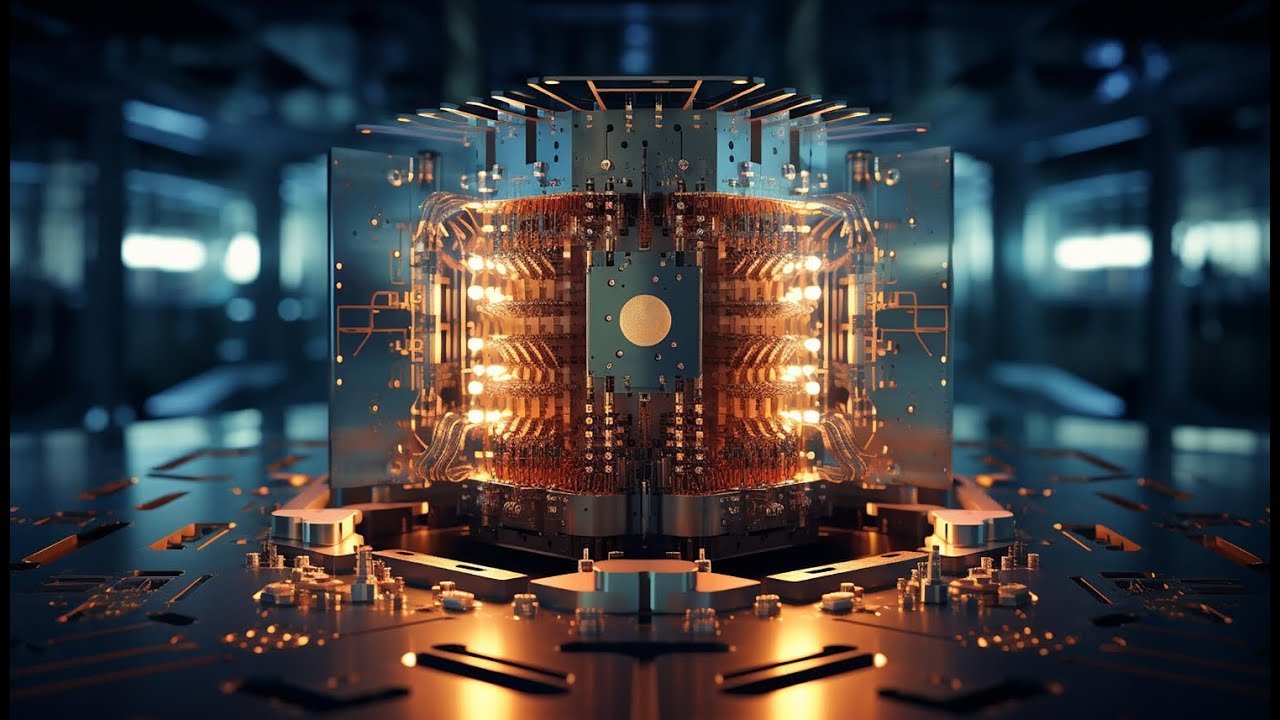
Quantum computing is no longer a futuristic concept — it’s becoming a game-changing technology in 2025. Unlike traditional computers that use bits (0 or 1), quantum computers use qubits, allowing them to process information in multiple states at once. This makes them millions of times faster for certain complex tasks like data encryption, scientific simulations, and financial modeling.
As governments and tech giants invest heavily in quantum research, a new era of cybersecurity and computational power is emerging.
What Makes Quantum Computing So Powerful?
Quantum computers can perform multiple calculations simultaneously using principles of:
• Superposition – qubits exist in many states at the same time
• Entanglement – qubits stay connected even when separated
This enables extraordinary processing capability far beyond classical computers.
Quantum Computing in Cybersecurity
1️⃣ Breaking Traditional Encryption
Most current security systems like RSA encryption rely on complex math — hard for normal computers but easy for quantum systems. A fully developed quantum machine could:
✔️ Decrypt passwords
✔️ Break banking encryption
✔️ Decode secret government files
This creates both huge risks and huge opportunities.
2️⃣ Quantum-Safe Cryptography
To counter threats, researchers are developing:
• Post-quantum encryption
• Quantum key distribution (QKD)
• Zero-trust cybersecurity models
The goal is to make systems future-proof against quantum attacks.
Quantum Computing in Business & Science
Quantum innovation is boosting major industries:
✔ Healthcare & Medicine
Simulating molecules to discover new drugs faster.
✔ Finance & Stock Market
Predicting global trends and preventing fraud more accurately.
✔ Artificial Intelligence
Accelerating machine learning and neural network training.
✔ Climate & Aerospace
Better weather forecasting, fuel optimization, and space research.
Quantum computing is becoming the next industrial revolution.
Government & Industry Competition
Countries like the USA, China, India, EU, and Japan are in a race to:
• Build the most advanced quantum processors
• Secure national data from cyber threats
• Lead in future tech infrastructure
Leading companies in the quantum race include IBM, Google, Intel, Microsoft, and D-Wave Systems.
Challenges Slowing Quantum Adoption
Even with progress, quantum computers face obstacles:
• Requires extremely low temperature stabilization
• High error rates in qubits
• Limited commercial availability
• Very expensive to build and maintain
But breakthroughs in quantum error correction and photon-based qubits bring hope for widespread adoption soon.
The Future: Quantum + AI + Cybersecurity
By combining quantum power with artificial intelligence, we could see:
✔ Real-time threat detection
✔ Ultra-secure global communication
✔ Data processing at unimaginable speed
Quantum computing is set to become the backbone of future cybersecurity.
Conclusion
2025 is a historic milestone for quantum technology. As the world prepares for a quantum-powered future, organizations must upgrade security systems and adopt quantum-safe encryption. The future belongs to those who understand and invest in this transformation today.
Quantum computing isn’t just a breakthrough — it’s the future of data power.
Helpful Links
https://www.ibm.com
https://www.intel.com
https://www.microsoft.com
